

Systems and Methods For Facilitating Package Delivery or Pick Up
Owned by Patent Owner • Listed on Thu Jun 12 2025
Login or create account to view owner information
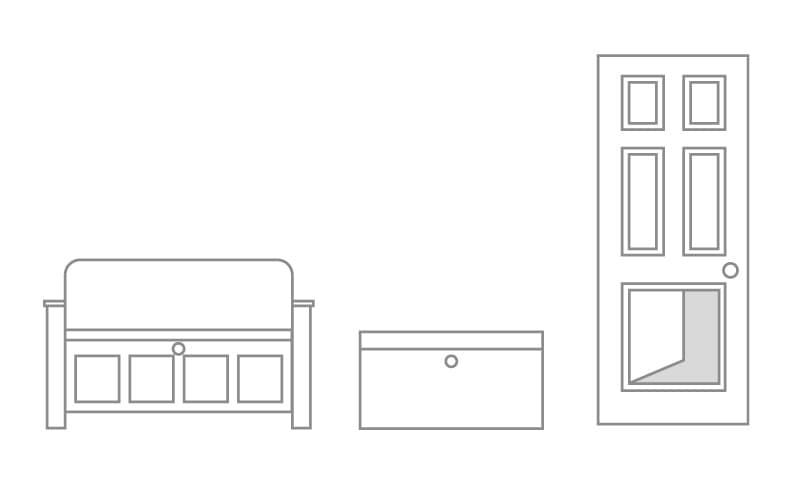
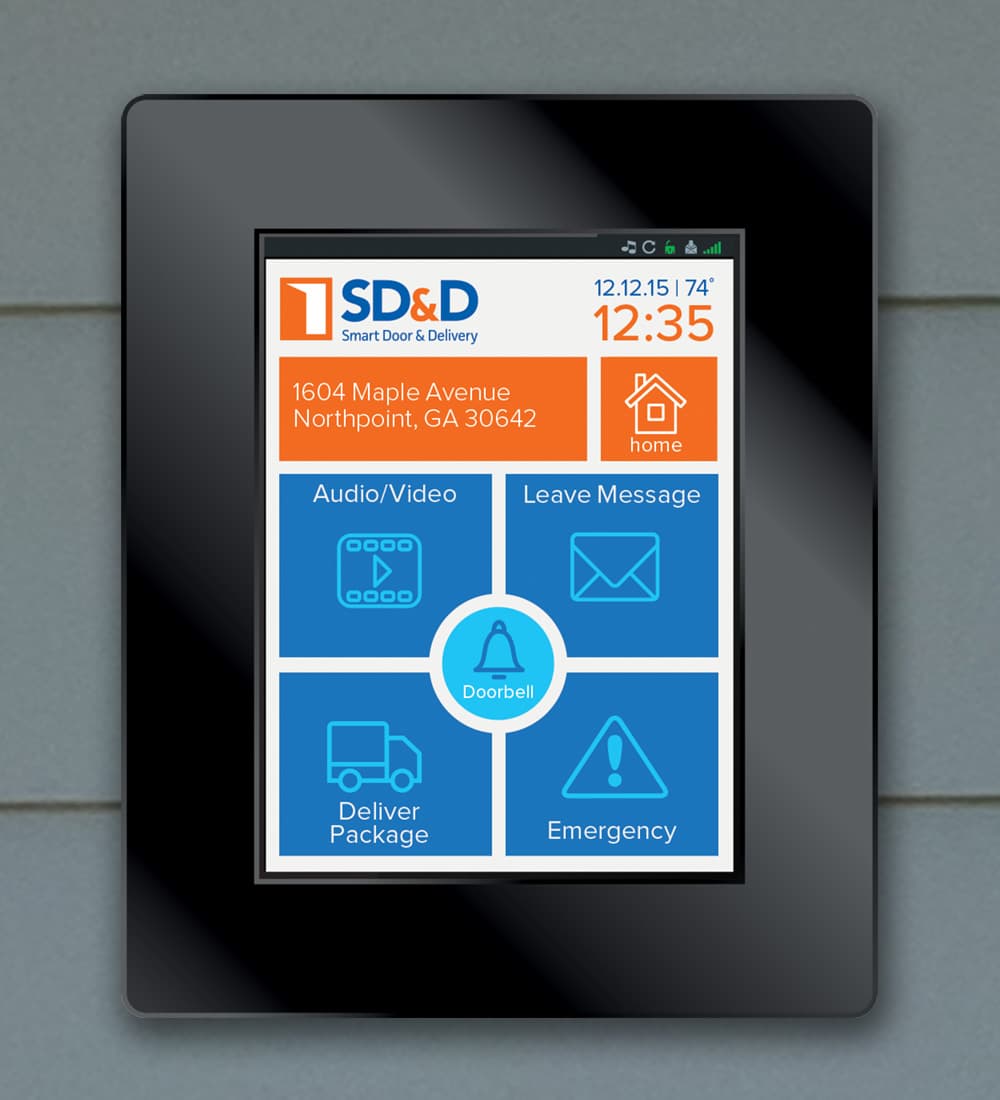
CONFIDENTIAL AND PRIVILEGED Mr. David Eichenblatt David Eichenblatt & Company, LLC 2924 Arden Road, NW Atlanta GA 30327 deichenblatt@lgisgroup.com deichenblatt@eichenblatt.com Re: Intellectual Property Assets Dear David: Attached please find a list of your IP assets. Per your request, below please find a brief summary of the claim scope of each issued patent. U.S. Patent No. 9,619,955 Below is a representative claim of the ‘955 Patent. 1. A package door system, comprising: a first door; a second door, wherein the first door is mounted in the second door; a door locking mechanism coupled to the first door; a data input device configured to receive, from a user, an authorization code for a package to be delivered or picked up through the first door; a display screen configured to display to the user at least one image via the display screen, wherein the displayed at least one image includes an image of a signature from a system operator, wherein the image of the signature from the system operator is displayed to the user in response to receipt of the authorization code by the data input device; and at least one computing device configured to receive the authorization code from the data input device and to perform a comparison between the authorization code and attribute data indicative of at least one package to be delivered or picked up by a courier service, the at least one computing device further configured to control the door locking mechanism based on the comparison. (Emphasis added). The ’955 Patent generally pertains to delivery of a package through a first door that is mounted in a second door. The locking/unlocking of the second door is controlled based on comparison of an authorization code received from a delivery person (e.g., the second door is unlocked when the authorization code matches “attribute data indicative of the package). However, the ‘955 Patent requires an image of a signature to be displayed to the delivery person. Note that the ‘955 Patent also has claims that do not require the delivery to be through a “door within a door,” but such claims require an attribute history (e.g., sender name or product category) of packages delivered through the door to be maintained. Conclusion: Patent protection is generally for signature deliveries whereby (1) the signature is displayed to the delivery person by a display screen and (2) a door lock for a “door within a door” is controlled based on an authorization code provided to a data input device by the delivery person. Based on the prosecution of the ‘955 Patent, it seems possible to file future applications directed to the signature display concept without including limitations involving a “door within a door” such that the future claims may be applicable to a bench, a box, a front door, a garage door, etc. U.S. Patent No. 10,255,737 Below is a representative claim of the ‘737 Patent. 1. A package door system comprising: a door; a door locking mechanism coupled to the door; a user interface positioned near the door and comprising a data input device, the data input device configured to receive an input provided by a user; and at least one computing device configured to receive the user input from the data input device and to perform a comparison between the user input and stored data associated with at least one package to be delivered or picked up by a courier service, the at least one computing device further configured to control the door locking mechanism based on the comparison. The ‘737 Patent does not require the display of a signature as does the ‘955 Patent. The ‘737 Patent also does not require the package to be delivered or picked up through a “door within a door.” That is, the package may be delivered or picked up through a front door (or other door) of a premises or wall or a door of a box or bench. The ‘737 Patent requires a user (e.g., person delivering the package) to provide an input that is compared to stored data associated with the package to be delivered (e.g., a package ID or authorization code for the package), and the door locking mechanism is controlled based on the comparison. Thus, the ‘737 Patent generally covers a situation when a delivery person arrives at a premises and provides an input (e.g., a manual input or wirelessly transmits an input) to a user interface that is “positioned near the door” of the house, bench, box, wall, etc. in order to gain access to the premises or a compartment (e.g., box or bench) at the premises. For example, a locking mechanism for controlling the locked/unlocked state of the door may be controlled to unlock the door based on comparison of the input to stored data associated with the package (e.g., the door may be unlocked when the input matches a package number or authorization code associated with the package). Conclusion: Patent protection generally covers a delivery person who provides a user input (e.g., authorization code or tracking number) with a user interface positioned near a door (e.g., front door, garage door, bench door, box door, or other door) to gain access through the door for package delivery or pickup. Doors can be residential, business, storage containers, lockers, etc. and input can be manual or wireless. U.S. Patent No. 10,755,511 Below is a representative claim of the ‘511 Patent. 1. A package door system comprising: a door for controlling access to a space for delivery or pickup of a package by a courier service; a door locking mechanism coupled to the door; a data input device positioned near the door and configured to receive an input from a device or label carried by a delivery person of the courier service delivering or picking up the package; and at least one computing device configured to receive the input from the data input device and to perform a comparison between the input and stored data associated with the package, the at least one computing device further configured to control the door locking mechanism based on the comparison. (Emphasis added). The Patent ‘511 is similar in scope to the ‘737 Patent, but the ‘511 Patent makes it clear that the delivery person is not required to submit via a “user interface” an input that is used to open the door. In this regard, the ‘511 Patent makes clear that the input can be transmitted from “a device or label carried by” the delivery person to a “data input device” that is positioned near the door. Thus, having the input wirelessly transmitted from a device carried by the delivery person or read from a label of the package would be covered by the ‘511 Patent. Based on the scope of the claim, the input may be transmitted directly to the “data input device positioned near the door” from a device carried by the delivery person, or the input may be transmitted indirectly to the “data input device positioned near the door” (e.g., pass through the Internet or other network to the “data input device”). Conclusion: Patent protection generally covers a delivery person who provides an input (e.g., authorization code or tracking number) to a data input device positioned near a door (e.g., front door, garage door, or other door) to gain access through the door for package delivery or pickup. The patent makes clear that the input may be input manually or wirelessly communicated (e.g., scanning, NFC, FOB, cellular etc.) to the data input device. U.S. Patent No. 11,922,750 Below is a representative claim of the ‘750 Patent. 15. A method for facilitating deliveries, comprising: receiving an input at a data input device positioned near a door, the input provided by a user; comparing, by at least one computing device, the input to stored data associated with at least one package to be delivered or picked up by the user; automatically controlling a door locking mechanism for the door based on the comparing, the door locking mechanism having a locked position and an unlocked position, wherein the automatically controlling comprises transitioning the door locking mechanism from the locked position to the unlocked position. The ‘750 Patent is similar to the ‘737 Patent, but it includes a method claim that directly reads on steps being performed by equipment mounted at the delivery location, which may be helpful from a legal perspective to find direct infringement in the event that the portfolio is asserted against an infringer. It also makes clear (similar to the ‘511 Patent) that the “data input device” is not necessarily a “user interface.” As an example, a device that receives a wireless signal would constitute a “data input device” irrespective of whether it has a touchscreen or components (e.g., buttons or switches) for receiving direct user input. Conclusion: Patent protection generally covers a delivery person who provides an input (e.g., authorization code or tracking number) from any type of device or label (e.g., package label) carried by the delivery person to a data input device positioned near a door (e.g., front door, garage door, bench door, box door, other door) to gain access through a door for package delivery or pickup. The patent makes clear that the input may be input manually or wirelessly communicated (e.g., scanning, NFC, etc.) to the data input device. Amazon Key Per your request, we have compared Amazon Key to the claims of your issued patents. After having reviewed Amazon Key’s website, we believe that there are two versions of Amazon Key (referred to hereafter as “Front Door Version” and “Garage Door Version”) that operate as follows. Front Door Version Upon arriving at a premises for delivery or pickup of a package using the Front Door Version of Amazon Key, a delivery person provides an input using a device mounted next to a door of the premises that is to receive the package. The input is a code that is used to authenticate the delivery person in order to unlock a door of the premises so that the delivery person can deliver or pickup a package. Upon comparing such the Front Door Version to the claims of your patents, it seems likely that such version of Amazon Key would likely infringe at least one claim of U.S. Patent Nos. 10,255,737 and 11,922,750. Garage Door Version Upon arriving at a premises for delivery of a package using the Garage Door Version of Amazon Key, a delivery person uses a device carried by him or her to scan the package and send information about the package and delivery person’s current location to a server, which determines whether to permit entry based on the received information. Notably, we believe that such communication is most likely cellular such that the transmission to the server does not go through a separate “data input device” located near the garage door, although Amazon Key’s website does not appear to explicitly describe the connection used to reach the server. Upon receiving the information transmitted by the delivery person, the server confirms whether the package is to be delivered at the delivery person’s current location, and if so, the server sends instructions to a garage door controller at the premises to open the garage door so that the delivery person can place the package in the garage. We believe that the analysis of the Garage Door Version turns on whether the input device used by the delivery person to receive and transmit an input (e.g., authorization code) for authorizing access is deemed to be “positioned near the door.” Arguably, this requirement is satisfied by the delivery person bringing the input device to a location near the door before using it to transmit an input (e.g., authorization code) used to grant access. If this requirement is indeed satisfied, then the analysis of the Garage Door Version is similar to that of the Front Door Version such that at least U.S. Patent Nos. 10,255,737 and 11,922,750 are likely infringed. Note, however, that the Amazon website does not appear to specify the exact location at which input device is used to transmit the input. BoxLock As you are aware, we have previously provided claim chart showing that each limitation of claim 1 of U.S. Patent No. 10,255,737 is likely satisfied by the BoxLock system advertised on its website. Thus, we believe that the BoxLock system likely infringes at least U.S. Patent Nos. 10,255,737 and 11,922,750. I hope that the above information is helpful. If you have any questions or would like to discuss the foregoing, do not hesitate to contact me. Sincerely, BUTLER SNOW LLP Jon E. Holland
SD_D_ - IP Deck - V13 - FINAL - 5-22-25.pptx
Patent Document
9,619,955 B2,10,255,737 B1, 10,755,511 B2, 11,922,750 B2
Patent Number
United States
Country Issued
Specifications
Patent Type
Utility
Categories
Prototype
Yes
Expiry
Not Expired
Pricing
Patent Price
Open to Offers
Research Included
3859/VY1i271o.pdf
Research Document
3859/dn0K1WCb.pdf
Research Document
3859/s69gmeRn.pdf
Research Document
3859/7JqQJbFn.pdf
Research Document
Cost Model
None
Owners
Patent Owner
Owns 75%
Login or create account to view owner information
Pricing
Owner Distribution
Patent Owner
Login or create account to view owner information